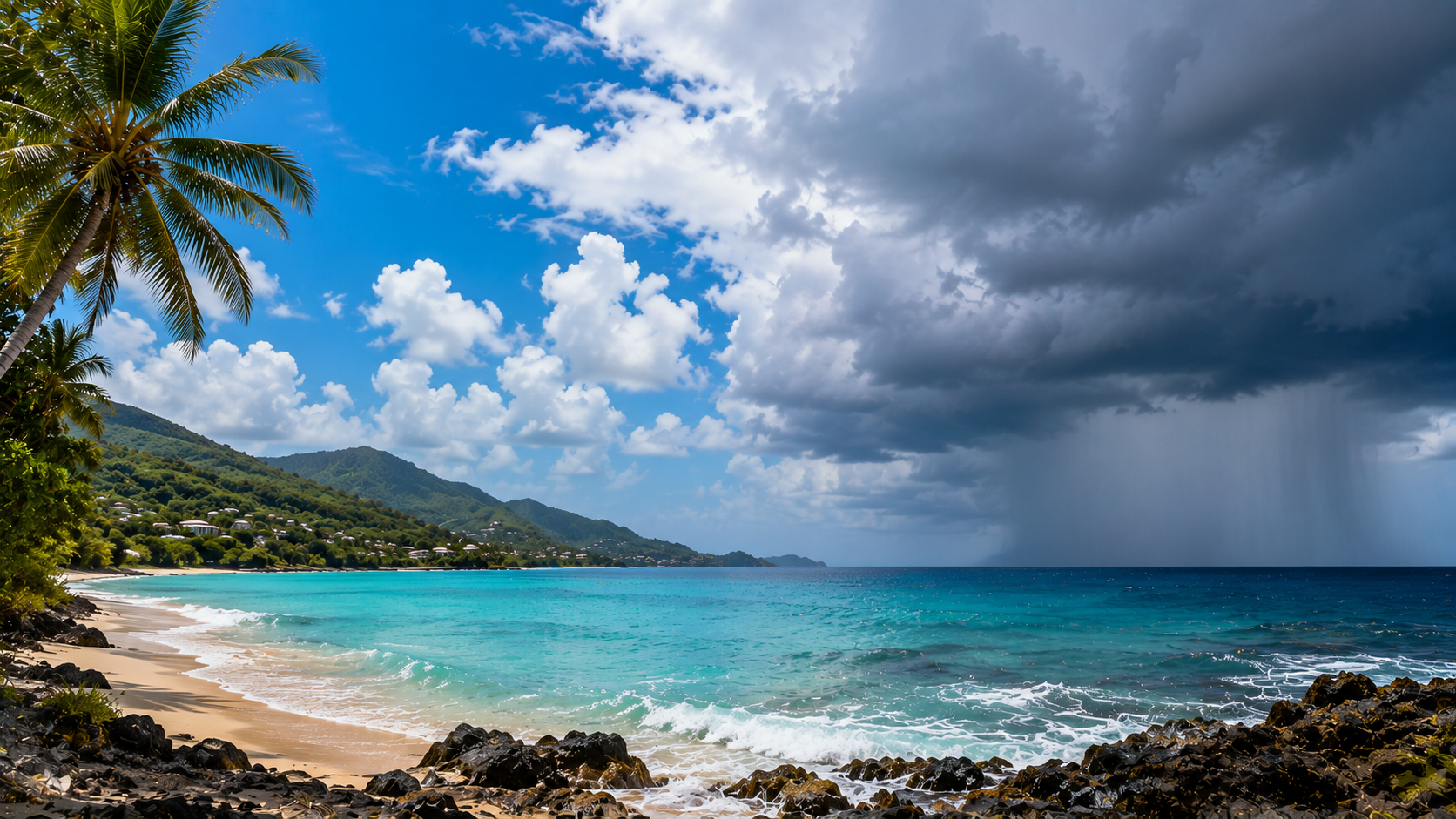
Caribbean Weather by Month: A Realistic Forecast Guide
Every year around January, I get some version of the same question: is it actually risky to book a Caribbean trip for September? Whoever's asking has usually read one hurricane season headline and now pictures the entire region shut down for six months straight. The honest answer depends on which Caribbean islands you're talking about, what month it is, and how you feel about an afternoon shower interrupting the beach.
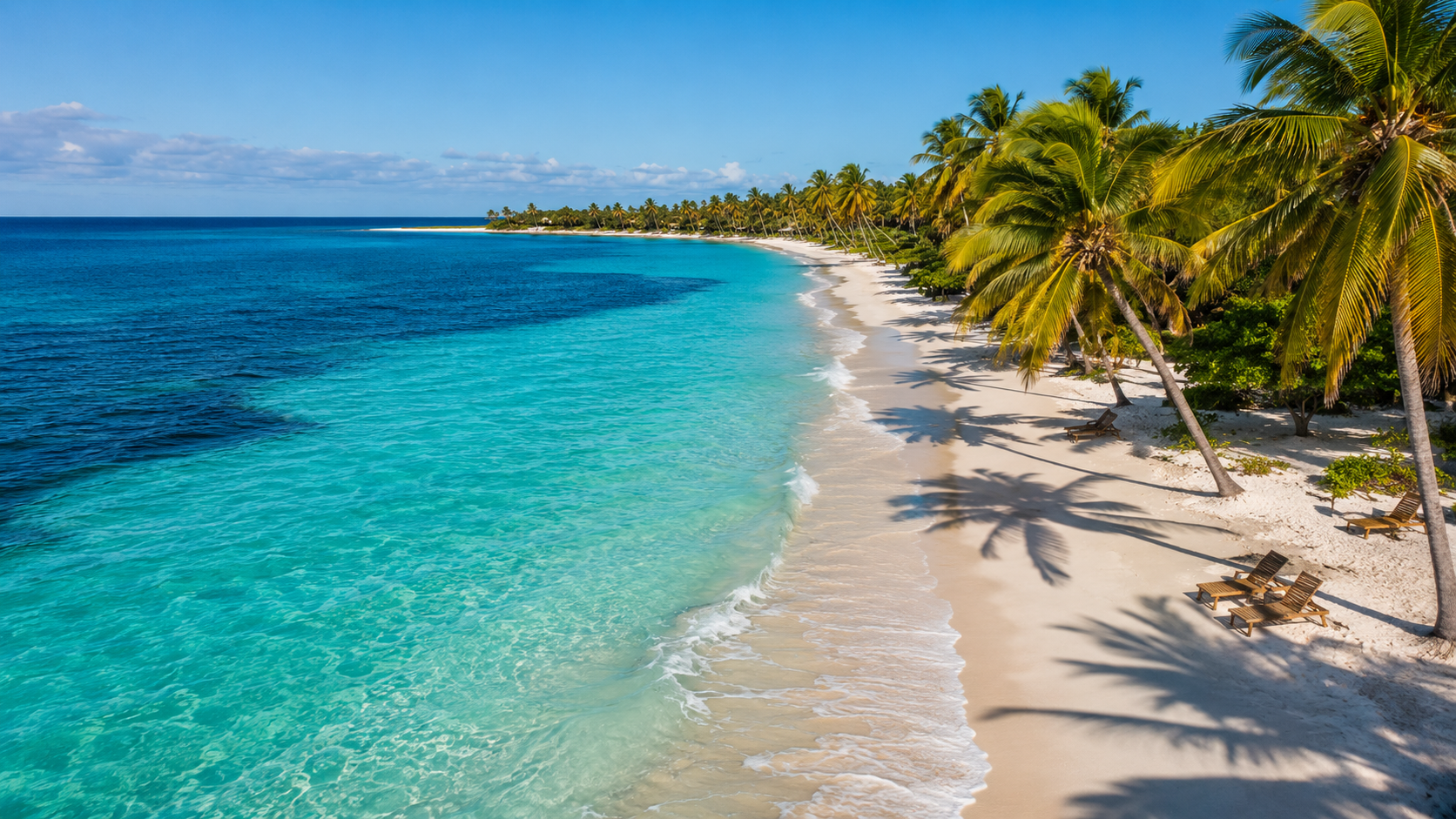
Caribbean weather isn't a single climate. It's a moving system of trade winds, shifting rainfall and tropical waves rolling off the African coast all summer, and it behaves differently depending on whether you're standing in Puerto Rico, Barbados or Aruba in any given week. This guide breaks the year down month by month, explains how the Atlantic hurricane season actually works, and gives you a realistic outlook rather than a marketing one.
The Caribbean stretches from the Bahamas down through the Greater Antilles (Cuba, Jamaica, Puerto Rico, the Dominican Republic) and the Lesser Antilles (the Leeward and Windward Islands, Barbados, Trinidad) to the ABC islands just off Venezuela. That geography matters more for weather than most people assume. Aruba and Curaçao sit south of the main hurricane belt and stay dry and sunny almost year-round, while Puerto Rico, the Virgin Islands and the northern Lesser Antilles sit squarely in the path of most Atlantic storms.
Quick Answer
Caribbean weather risk depends far more on which island and month you pick than on "hurricane season" as a blanket label. December through April is the driest and safest stretch but also the busiest and most expensive, July through September carries the peak hurricane risk and heaviest rainfall, especially for Puerto Rico, the Virgin Islands and the northern Lesser Antilles, and southern islands like Aruba, Bonaire, Curaçao, Trinidad and Tobago sit outside the main storm belt and stay lower-risk year-round.
Key Takeaways
- Temperature stays warm year-round (82 to 88°F); what actually changes month to month is rainfall, wind and storm risk, not heat.
- December to April is the driest, sunniest and safest season, but also the busiest and most expensive.
- Hurricane season runs June 1 through November 30 and peaks around September 10, when heavy rain and flooding are usually the bigger risk, not wind.
- Southern islands (Trinidad, Tobago, Aruba, Bonaire, Curaçao) sit outside the main hurricane belt and stay lower-risk year-round.
- Late April and late November offer the best balance of softer prices and low storm risk.
How Caribbean Weather Actually Works
Temperature is the boring part of Caribbean weather, and that's genuinely good news. Across most of the region, daytime highs run warm to hot year round, typically 82 to 88 degrees Fahrenheit (28 to 31 Celsius), dropping into the mid to high 70s Fahrenheit (24 to 26 Celsius) overnight. December and January feel noticeably cooler thanks to stronger, breezier trade winds, while July and August feel warmer and stickier as those winds ease off and humidity builds.
What actually changes month to month is rainfall, wind and storm risk, not temperature. Steady northeast trade winds keep most islands comfortable even under intense sun. Rain tends to arrive as short, heavy showers and thunderstorms rather than a gray, all day drizzle, and a downpour at lunch is often followed by full sunshine an hour later.
Caribbean Weather by Month: A Season-by-Season Outlook
Here's roughly what to expect if you split the year into four stretches.
December to April: The Dry Season
This is the driest, sunniest and most reliable stretch of Caribbean weather, and also the busiest and most expensive. Rainfall drops across the eastern Caribbean, humidity eases, and hurricane season is over, which removes most storm related cancellation risk. The trade off is stronger, sometimes gusty winds, locally called the "Christmas winds," that make the Atlantic facing coasts of islands like Barbados and Saint Lucia choppier than the calmer Caribbean Sea side. If a flat, glassy sea matters to you, this isn't automatically the season for it.
May and June: The Shoulder Season
May and June sit in the gap between the dry season and the official start of hurricane season on June 1. Rain picks up, humidity climbs and afternoon thunderstorms get more frequent, but organized tropical storms are still rare this early. Prices drop and crowds thin out, and for travelers willing to trade a daily shower for lower rates, this is usually the best value window of the year.
July to September: Peak Hurricane Season
This is when the Atlantic hurricane season is most active, with the climatological peak falling around September 10. Tropical waves moving off the African coast find the warm water and low wind shear they need to grow into tropical depressions, tropical storms and hurricanes, and the National Hurricane Center is often tracking two or three disturbances at once through August and September. September and October also tend to be the rainiest months across much of the eastern Caribbean, including Puerto Rico and the Virgin Islands. Heavy rainfall and flash flooding are usually a bigger practical concern than wind, even on islands a storm never directly hits.
October and November: Storms Fade, Deals Appear
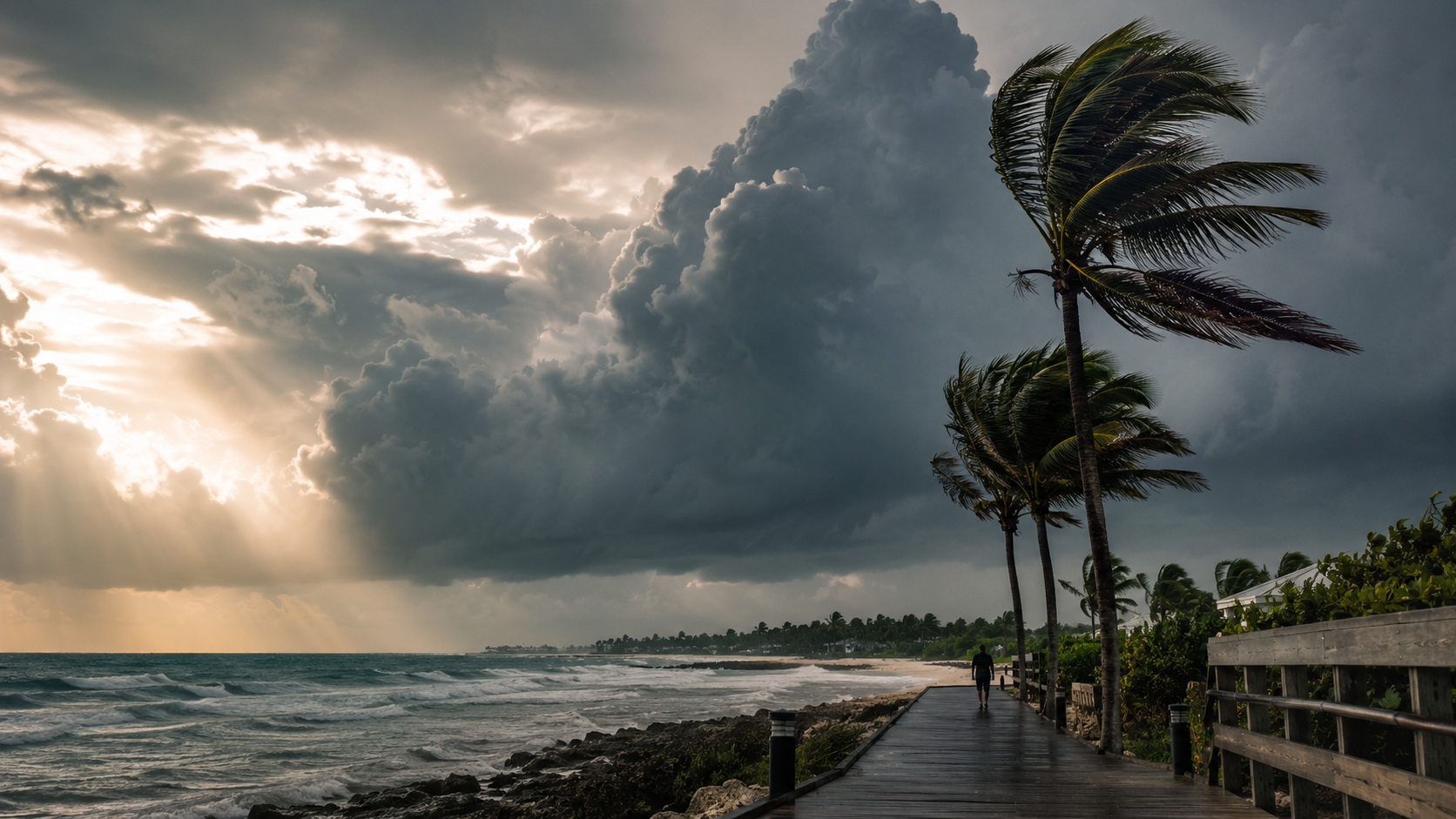
Hurricane activity typically tapers off through October and mostly clears by late November, though the season officially runs through November 30. Rainfall stays above the winter average, but the odds of a direct hit drop steadily as the weeks go by. The back half of November is often my pick for a flexible traveler chasing a bargain without much storm risk left.
| Months | Weather | Storm Risk | Prices |
|---|---|---|---|
| December to April | Driest, sunniest, breezier "Christmas winds" | Minimal, hurricane season is over | Peak, most expensive and busiest |
| May and June | Rain picking up, more frequent afternoon thunderstorms | Organized tropical storms still rare | Lower rates, best value window |
| July to September | Rainiest stretch, peak hurricane activity around September 10 | Highest, NHC often tracking multiple systems at once | Cheaper fares common for those set on this window |
| October and November | Rainfall above winter average, activity fading | Dropping steadily, low by late November | Bargains appear, especially in late November |
Hurricane Season, Tropical Waves and What the Forecast Maps Actually Show
The Atlantic hurricane season runs June 1 through November 30, and almost everything people worry about under "Caribbean weather" during a trip falls inside that six month window. Most systems start as a tropical wave, a pocket of low pressure pushing west off the African coast. Given warm ocean water, moisture and light wind shear, that disturbance can strengthen into a tropical depression, then a tropical storm (winds of 39 to 73 mph), and eventually a hurricane once sustained winds hit 74 mph. Steering currents, often tied to a ridge of high pressure sitting over the Atlantic, decide whether a system curves north toward the Gulf or continues on toward the islands.
Hurricanes are ranked Category 1 through 5 by wind speed alone, and even a Category 1 storm (74 to 95 mph) can bring dangerous storm surge and flooding. The National Hurricane Center issues watches and warnings as a system approaches, along with a forecast map showing the cone of uncertainty, satellite images, and, for storms nearing land, Hurricane Threats and Impacts (HTI) graphics that break the danger down by wind, storm surge and rainfall for each region rather than a single number.
Tip: If you want to know how the weather in the Caribbean looks next week, the NHC site and your destination's own meteorological service are more reliable than any general travel article, including this one.
Not every island carries equal risk. Trinidad, Tobago, Aruba, Bonaire and Curaçao sit south of the main hurricane belt and are rarely hit directly, which is part of why they market themselves as year-round destinations. Puerto Rico, the Virgin Islands, the Bahamas and much of the northern Lesser Antilles sit squarely in typical storm tracks and see far more direct hits over time.
Rainfall, Showers and What "Sunny Island" Really Means
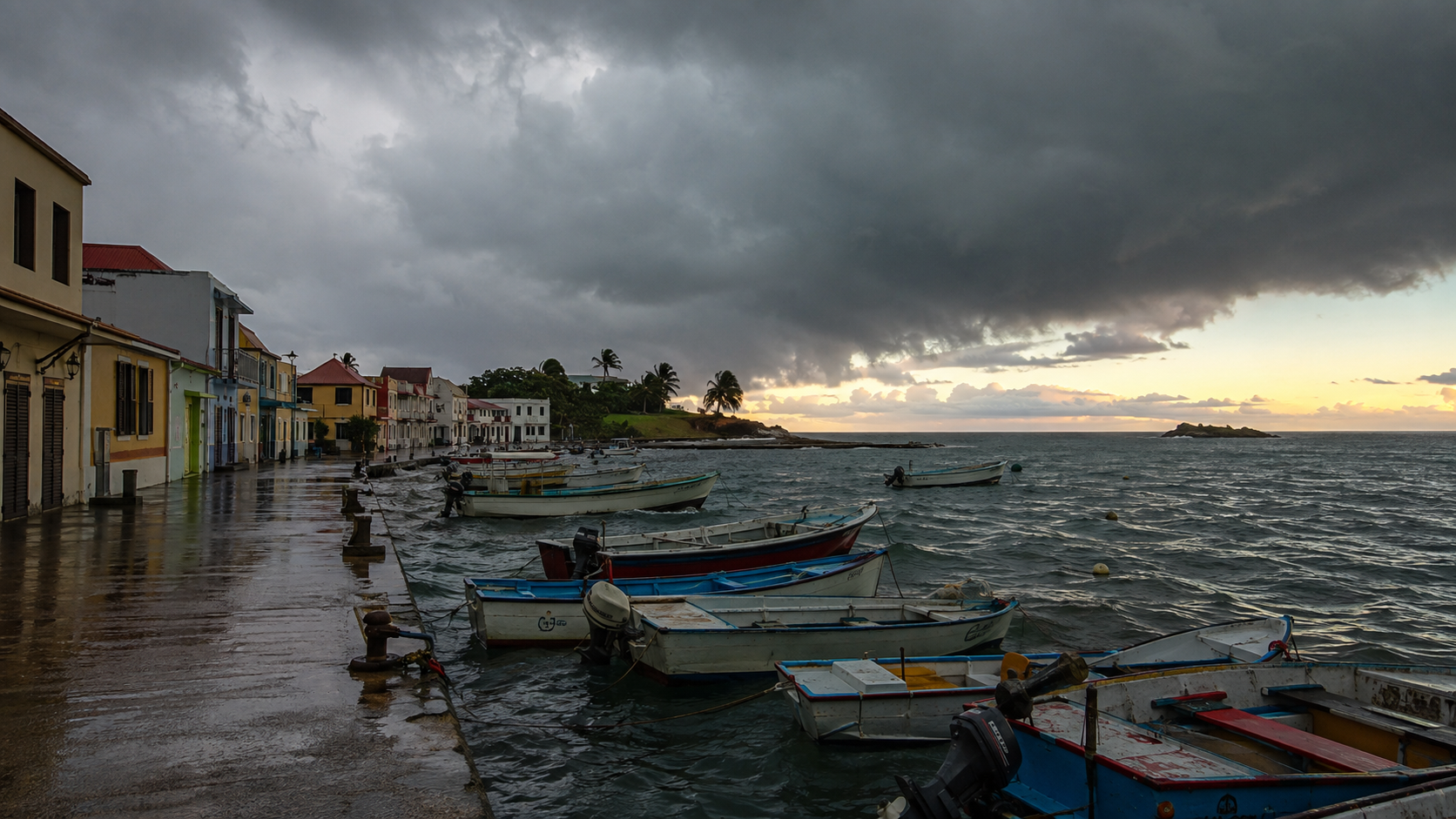
Even during the dry season, don't expect zero rain anywhere. Most Caribbean islands see some kind of shower most days, somewhere over the hills or interior. It's usually brief and localized rather than region wide. What changes month to month is duration and intensity, not whether rain happens at all. September and October bring the heaviest rainfall totals across most of the eastern Caribbean, and that rainfall, not the wind, is often the real problem during a storm, since flash flooding and mudslides on the hillier islands can shut down roads for days even after a system has weakened to a remnant low.
The driest islands, generally the ABC islands and the southern Lesser Antilles like Trinidad, get noticeably less rain year-round than the wetter, mountainous islands such as Dominica or the interior of Puerto Rico, where clouds stall against the peaks and dump considerably more.

Coastal and Offshore Conditions: Wind and Rough Seas
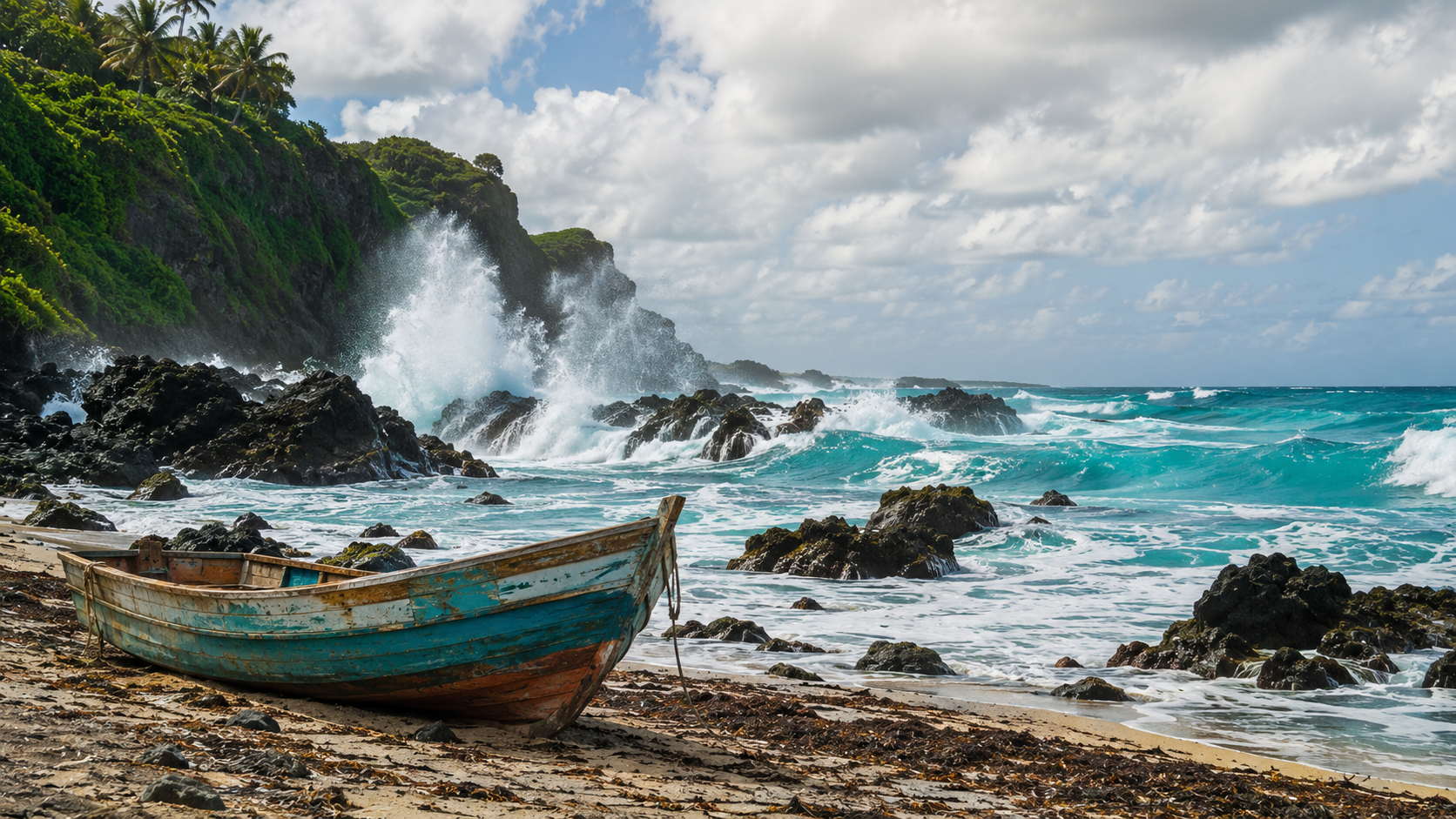
If you're asking whether the seas are rough right now, the honest answer depends on the coast, not just the season. Winter's stronger trade winds create choppier, more offshore swell on the Atlantic facing east coasts of islands like Barbados and Saint Lucia, while the calmer Caribbean Sea side of the same islands often stays flat. Coastal conditions can shift within a few miles, which is why one beach can be glassy while the windward side of the same island has real surf.
For cruise passengers, the practical question is usually which months to avoid. August through October carries the highest chance of an itinerary change, since cruise lines reroute around a storm rather than sail through one. It's rarely dangerous by the time it affects passengers, more just disappointing when a port day gets swapped for an extra sea day.
So What's the Best Month for Your Caribbean Destination?
December through April is the safest bet if reliable sun and minimal storm risk matter most, and it's genuinely the best time for a lot of travelers, though you'll pay peak season prices and deal with bigger crowds. If you want warm water, lower prices and don't mind an afternoon thunderstorm, May, June and the second half of November are worth a serious look. If you're set on hurricane season travel because of a summer break or a cheap fare, sticking to Trinidad, Tobago, Aruba, Bonaire or Curaçao keeps your storm exposure far lower than heading to Puerto Rico or the northern Lesser Antilles at the same time of year.
If I Were Booking a Trip Right Now
I'd check the calendar before I checked the map. Given total flexibility, I'd go in late April or late November, right on the edges of the dry season, when prices are softer than peak winter and storm risk is close to zero. None of that guarantees perfect weather. It just stacks the odds in your favor, which is about as good as anyone planning travel to the Caribbean can realistically ask for.
Tip: If you have to travel in August or September, buy travel insurance that actually covers named storms, watch the forecast closely in the ten days before departure, and lean toward an island south of the hurricane belt if your dates aren't flexible.

Share this Rant:
Frequently Asked Questions
What's the best month to go to the Caribbean?
December through April is the most reliable stretch for sunshine and low storm risk, which is why it's peak season with the highest prices. If you want good weather without the crowds, aim for late April, May or the second half of November instead.
Are the Caribbean seas rough right now?
It depends more on the coast than the season. Winter's stronger trade winds make the Atlantic facing east coasts of islands like Barbados and Saint Lucia choppier, while the Caribbean Sea side of the same island often stays calm, so check conditions for the specific coast you're headed to rather than the island as a whole.
What months should I avoid for a Caribbean cruise?
August through October carries the highest chance of an itinerary change, since cruise lines reroute around active storms rather than sail through them. It's rarely dangerous for passengers by that point, it just means a higher chance of a swapped port day.
How can I check the Caribbean weather for next week?
The National Hurricane Center's site is the best source during hurricane season for tracking any active tropical storm or disturbance, and most islands also have their own official weather forecast service for day to day conditions. A general travel article, including this one, isn't a substitute for either closer to your travel dates.
What are Hurricane Threats and Impacts (HTI) graphics?
HTI graphics are National Hurricane Center products issued as a storm nears land that break down the specific risk from wind, storm surge and rainfall by region, rather than giving one overall danger rating. They're more useful than the forecast map alone if you're trying to understand what a storm will actually do to a particular coastline.
What's the rainiest month in the Caribbean, and how much do temperatures really change?
September and October are typically the rainiest months across most of the eastern Caribbean, largely because they fall during peak hurricane season. Temperature barely moves year round, generally 82 to 88 degrees Fahrenheit (28 to 31 Celsius) by day, so rainfall and storm risk affect a trip far more than any seasonal temperature swing.
Comments (0)
No comments yet. Be the first to complain.