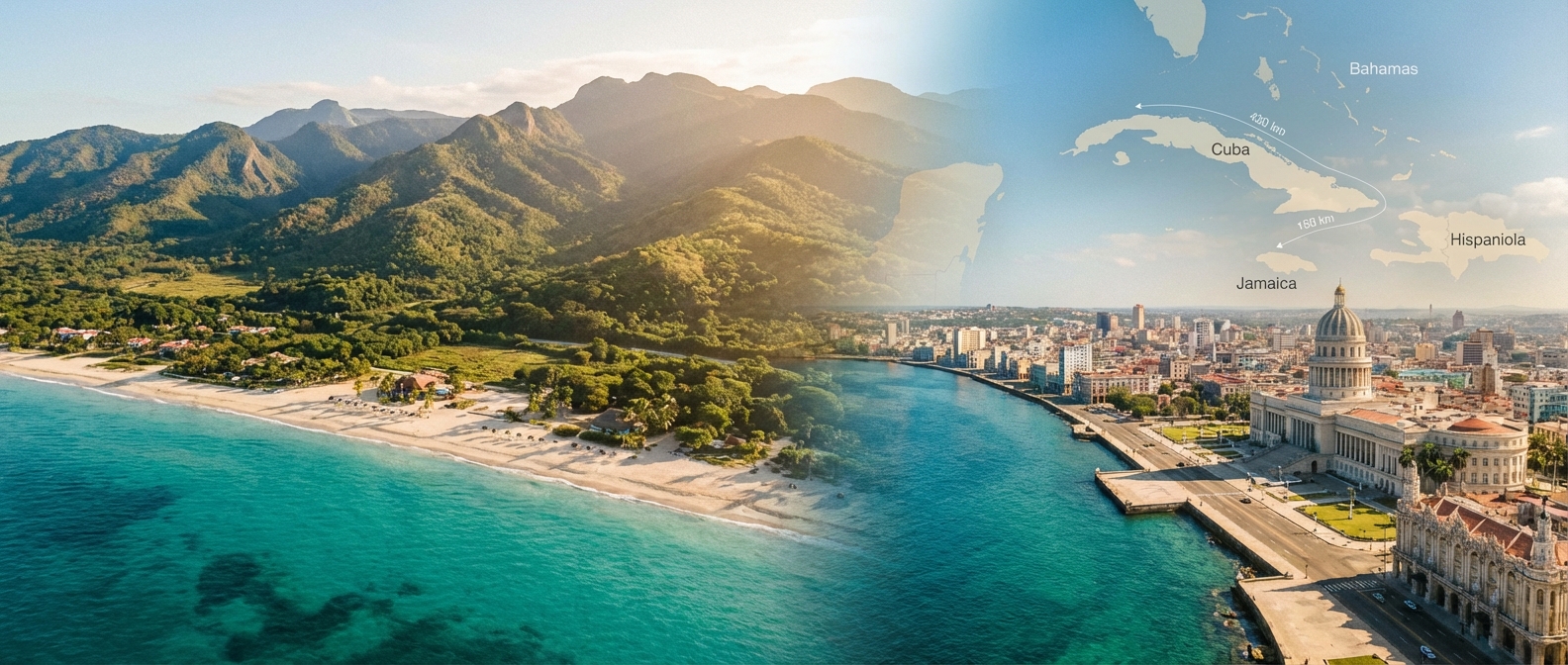
Largest Island in the Caribbean: Cuba Explained (Size, Facts & Comparisons)
We’re not talking “barely bigger than” kind of large. We’re talking dominates-the-map kind of large. This isn’t just a cool trivia fact, Cuba’s massive land area means real impact: more people, more culture, more food, more everything.
Largest Island in the Caribbean (and Why It Matters)
The largest island in the Caribbean is Cuba, by a massive margin.
We’re not talking “barely bigger than” kind of large. We’re talking dominates-the-map kind of large. This isn’t just a cool trivia fact, Cuba’s massive land area means real impact: more people, more culture, more food, more everything.
This guide breaks it all down: how Cuba compares to other Caribbean islands, why size matters for travel, and how to make sense of all the island names and numbers being thrown around online.
Quick Answer
The largest island in the Caribbean is Cuba, covering about 42,426 square miles (110,860 square kilometers). It's part of the Greater Antilles and dwarfs every other island in the region. The runner-up is Hispaniola, shared by Haiti and the Dominican Republic, at roughly 29,530 square miles.
What’s the Largest Caribbean Island?
Let’s get the numbers out of the way. The largest Caribbean island is:
Cuba
Land area: ~42,426 square miles
Total area in square kilometers: ~110,860
Location: North Caribbean, touching both the Caribbean Sea and the Atlantic Ocean
Cuba is part of the Greater Antilles, a group that includes Jamaica, Puerto Rico, and Hispaniola (home to Haiti and the Dominican Republic). But Cuba? It’s easily the biggest of the bunch.
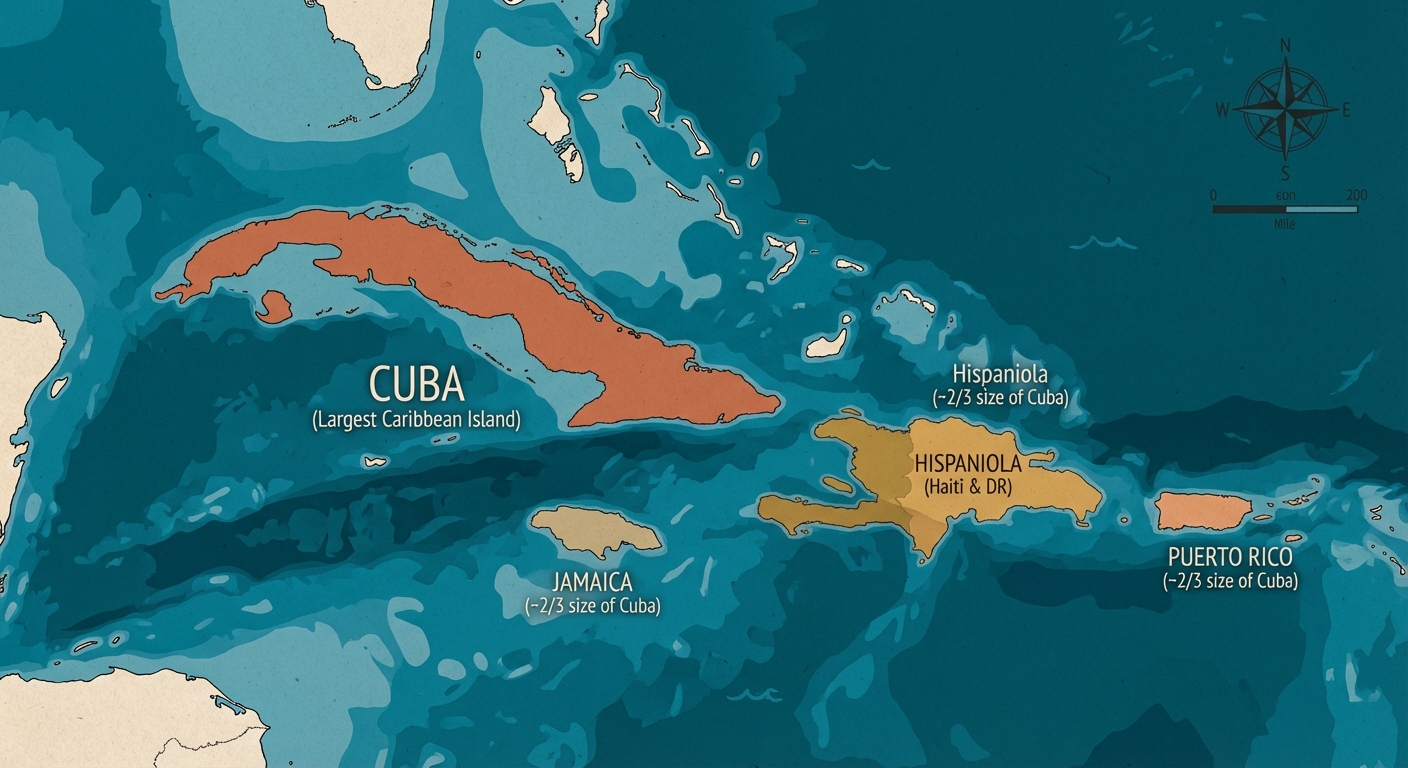
Caribbean Island Size Rankings (Top 5 by Land Area)
To give some perspective on how big Cuba is, let’s stack it up against other major Caribbean islands:
Rank | Caribbean Island | Land Area (sq mi) | Notes |
|---|---|---|---|
1 | Cuba | 42,426 | The largest island nation in the Caribbean |
2 | Hispaniola | 29,530 | Shared by Haiti and the Dominican Republic |
3 | Jamaica | 4,244 | Jamaica is the third largest island |
4 | Puerto Rico | 3,515 | U.S. territory, not a sovereign country |
5 | Trinidad | 1,841 | Part of Trinidad and Tobago, near Venezuela |
Worth noting: While the Bahamas is often thought of as one big island, it’s actually a spread of smaller islands, not a single large landmass.
Why Cuba’s Size Changes Everything
Being the biggest doesn’t just look good on a map. Cuba’s massive size impacts almost every part of life on the island:
🏙️ Urban Life
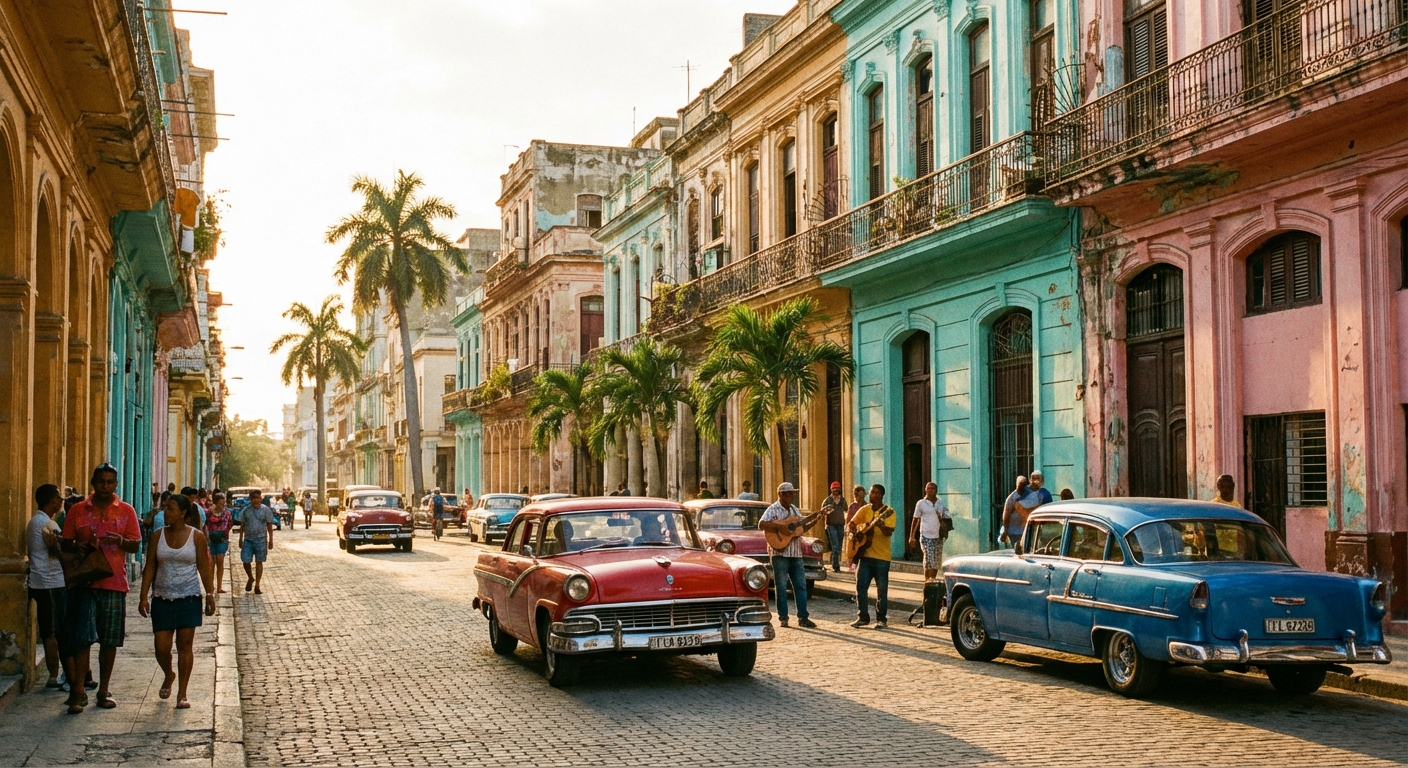
Cuba’s capital, Havana, is the largest city in the Caribbean region. It’s bursting with street life, music, historic architecture, and cultural heritage that reflects centuries of Cuban history.
🌄 Landscapes & Nature
You’ll find mountainous regions, fertile plains, wetlands, and tranquil beaches all in one trip. The variety is unmatched in the region.
🎶 Culture & Flavor
The scale allows for major diversity in culture. Think reggae music in Jamaica? Cuba has its own sonic footprint from salsa to son cubano. And let’s not forget about the rum, food, and revolutionary art scenes.
🚗 Travel Within the Island
Most Caribbean islands can be explored in a few days. Cuba? You’ll need weeks to truly get across it. It’s not just the largest by square kilometers, it’s large in experience.
🏝️ How Other Caribbean Islands Compare
Haiti and Dominican Republic (Hispaniola)
Together, they share the second-largest island in the Caribbean, known as Hispaniola. While Haiti occupies the western third, the Dominican Republic takes up the eastern side.
Santo Domingo, the DR’s capital, is the oldest continuously inhabited city in the Americas.
Cultural split: French-influenced Haiti, Spanish-influenced Dominican Republic
Diverse terrains: From beaches to mountains to colonial cities
Jamaica
The third largest island in the Caribbean and a sovereign island nation known for:
Reggae music
World-famous jerk cuisine
Lush mountains and relaxed beach vibes
Puerto Rico
A U.S. territory with all the convenience of the States (dollar currency, no passport needed for U.S. citizens), plus:
Spanish colonial architecture
Rainforest hikes in El Yunque
Stunning beaches and vibrant nightlife
Trinidad and Tobago
Often overlooked, but full of personality:
Trinidad is the bigger, more industrial and culturally rich island
Tobago is smaller, with tranquil resorts, coral reefs, and peaceful vibes
🏖️ The Lesser Antilles and Smaller Islands
Beyond the Greater Antilles, you’ll find the Lesser Antilles - smaller but just as fascinating:
Barbados - A flat island with deep British heritage and perfect white sand beaches
Guadeloupe & Martinique, French-speaking islands with stunning landscapes and food
Dominica, Saint Lucia, and Antigua, Popular for eco-tourism and tranquil, volcanic beauty
And don’t forget the ultra-small but gorgeous spots like:
The Bahamas - A collection of islands, not one large landmass
Virgin Islands - U.S. and British territories filled with white beaches, coral reefs, and laid-back living
📌 Why Island Size Matters When You Visit the Caribbean
Let’s be real, when you’re planning a trip, bigger doesn’t always mean better, but it does mean more variety.
In Cuba, you get everything: culture, history, city life, remote villages, and untapped beaches.
In Puerto Rico or Barbados, you can do more in less time, ideal for short stays.
In Trinidad and Tobago, you can party in Port of Spain or chill in Tobago without flying between islands.
Smaller islands like Guadeloupe or Saint Lucia offer tranquil escapes with distinct charm and nature.
🧳 Final Word: Think Beyond the Brochure
Understanding the largest Caribbean island gives you real context about the region. You can’t compare Cuba to Barbados just because they both sit in turquoise water. The experience is wildly different.
When you factor in land area, total area, sovereign status, and cultural diversity, you start to understand how size shapes identity in the Caribbean.
So yeah, Cuba’s the biggest, but every island has its lane.
Pick yours based on your travel style, not just the brochure photos.
Want a Personalized Island Match?
Skip the generic "where to go" quizzes and try our Caribbean Trip Fixer, built for real travelers who want to explore the island that actually fits their vibe.
Looking for more no-fluff Caribbean guides?
Check out our breakdown of the best Caribbean islands for foodies or use our Island Trip Fixer tool to find your perfect vibe.
Let’s skip the brochures and explore the real side of the Caribbean.
Share this Rant:
Frequently Asked Questions
What is the largest island in the Caribbean?
Cuba is the largest island in the Caribbean by far, with a total land area of about 42,426 square miles (110,860 square kilometers). It’s nearly double the size of Hispaniola, the second-largest island.
Which island is bigger: Cuba or the Dominican Republic?
Cuba is significantly larger. The Dominican Republic is located on the island of Hispaniola, which it shares with Haiti. Cuba covers more land area than both countries on Hispaniola combined.
Is Cuba a country or part of another country?
Cuba is a sovereign island nation, it’s the largest independent country in the Caribbean by land area.
Is Jamaica one of the biggest Caribbean islands?
Yes, Jamaica is the third-largest island in the Caribbean. It’s smaller than both Cuba and Hispaniola but still offers a diverse landscape and vibrant culture.
Are the Bahamas one big island?
No. The Bahamas is an archipelago made up of over 700 islands and cays. While some are quite large, the Bahamas as a whole isn’t counted as a single large island.
What’s the largest Caribbean island that's a U.S. territory?
Puerto Rico is the largest Caribbean island under U.S. territory. It's smaller than Cuba, Hispaniola, and Jamaica, but still substantial and packed with rich history and natural beauty.
Which Caribbean island has the largest city?
Havana, Cuba holds the title for the largest city in the Caribbean, both in population and land area. It’s a cultural and historical powerhouse.
Why does island size matter when traveling?
Larger islands often offer more variety, from mountains to beaches to urban centers. But size isn't everything. Smaller islands can be easier to explore and offer a more relaxed, intimate vibe.
What are the four largest Caribbean islands?
In order of size: Cuba Hispaniola (Dominican Republic & Haiti) Jamaica Puerto Rico
Comments (0)
No comments yet. Be the first to complain.